Flowers suspended high above visitors’ heads, structures made of branches reaching several metres tall, or a single type of flower repeated hundreds of times. Contemporary floristry can surprise us not only with its choice of materials but also with the way those materials are used.
And behind many of the techniques florists commonly use today are individuals who helped develop them. Some have changed the very way we look at flower arranging, while others have become famous for spectacular installations or success in international competitions.
So who is the world's most famous florist? There is no definitive answer. Floristry competitions have their champions, while the worlds of art, fashion and luxury events recognise entirely different creators. That is why we have selected eight individuals who demonstrate just how diverse this field can be.
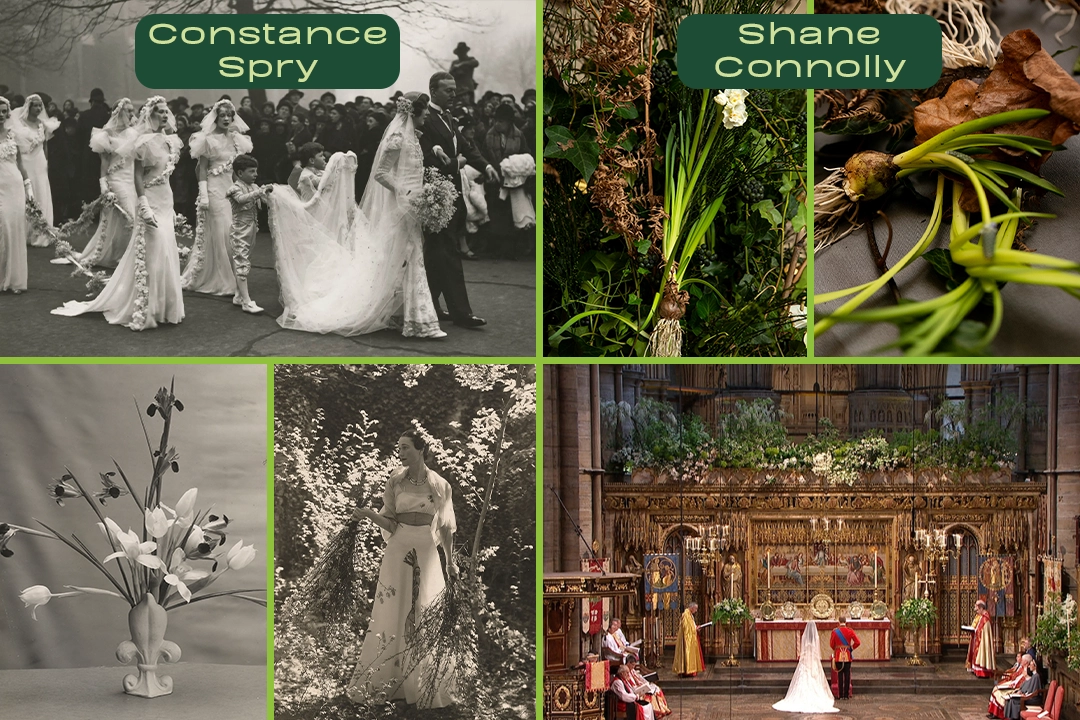
Willow branches, garden flowers and ordinary vegetables. These are the materials that British florist Constance Sprytransformed into arrangements that captured the attention of London society. And she did so at a time when luxury floral decorations were expected to be elegant, symmetrical and made primarily from traditional flowers.
In the late 1920s, Spry began experimenting with materials that had no place in formal floristry at the time. She was not afraid to combine expensive flowers with wild plants, branches, leaves or vegetables. For her, the overall composition mattered more than the value of individual stems.
Her approach gradually changed perceptions of what could be used in floral arrangements. In 1929, she opened her own London business, Flower Decoration, later established a floristry school and published 13 books.
Her work even reached the British royal court. In 1953, she contributed to the floral decorations at Westminster Abbey for the coronation of Elizabeth II.
Wondering why her legacy still matters today? Many principles of contemporary natural floristry, such as working with seasonal materials, irregular shapes and unusual textures, reflect her approach.
Spry demonstrated that an original arrangement does not have to start with the most expensive flower in the collection. And we could not agree more.
Imagine being responsible for the floral decorations at one of the most-watched events in the world. Every arrangement must impress not only thousands of guests but also television cameras and millions of viewers.
These are exactly the kinds of commissions British florist Shane Connolly has worked on.
Yet his work is not defined by extravagance at all costs. Connolly is known for his emphasis on seasonality, the natural appearance of plants and a more responsible approach to floristry materials. When preparing royal commissions, he worked with flowers, branches and foliage to make the arrangements feel like a natural part of their surroundings.
He is also a prominent advocate of alternatives to disposable floristry supplies, including traditional floral foam. His work highlights one important point: luxury floristry does not have to mean using as many exotic flowers as possible.
Sometimes, a carefully considered combination of seasonal plants, suitable structures and respect for the character of a location can create a much stronger impression.
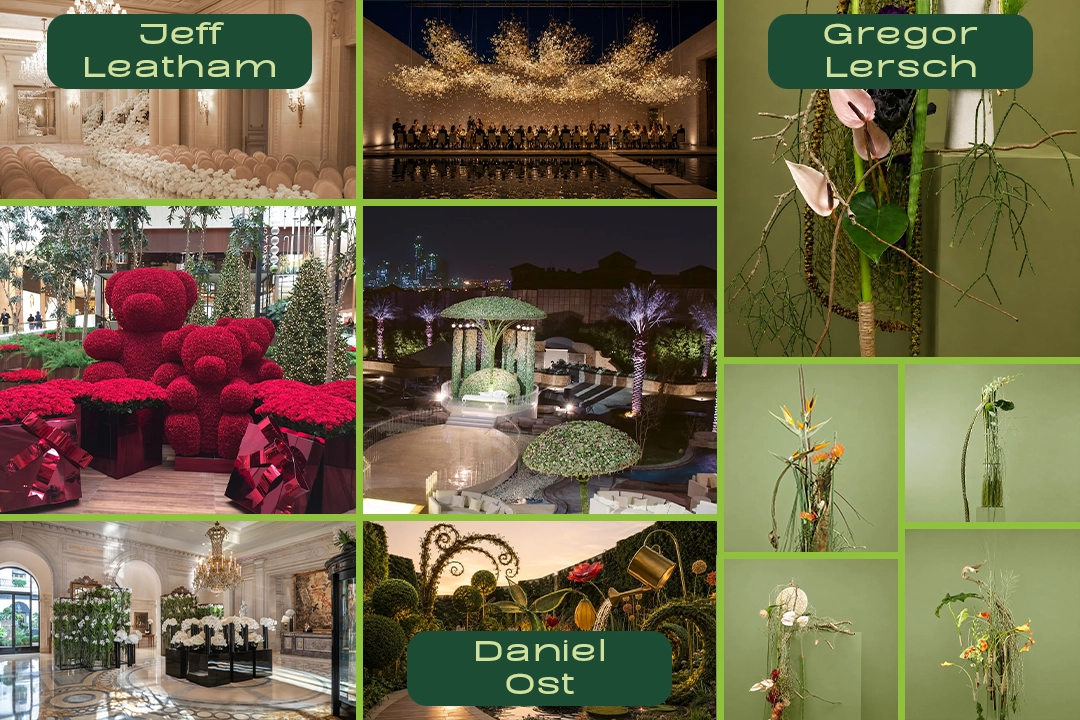
If you have ever seen photographs of giant floral installations at the Parisian hotel Four Seasons George V, there is a good chance you have come across the work of Jeff Leatham.
The American florist became famous for compositions that are anything but subtle. Dozens or even hundreds of blooms in a single colour, bold geometric shapes and arrangements that often reach several metres in height.
His work has become a distinctive part of the visual identity of the luxury Four Seasons George V hotel in Paris. It was here that he gained the freedom to experiment with scale, colour and spatial installations.
In addition to hotel floristry, Leatham also became known for working with world-famous celebrities. Personalities associated with his work include Oprah Winfrey, Beyoncé and Cher, among others. His floral design has therefore found its way into exclusive celebrations and high-profile social events.
What sets him apart from others? Above all, it is his ability to create a strong visual impact using seemingly simple means. Instead of combining many different types of flowers, he often relies on repeating a single shape, shade or variety.
Try imagining this principle with roses, hydrangeas or carnations, for example. If you use just one type in a larger quantity and focus on its shape and colour, the final composition can feel completely different from a classic mixed arrangement.
Floral arrangements do not simply have to be placed in a space. They can actually create the space itself.
Belgian florist Daniel Ost is one of the figures who has taken this idea remarkably far. His installations resemble sculptures, architectural structures or living works of art more than traditional floral decorations.
Ost began working professionally in 1979. A key moment in his career came with a visit to Japan in 1983, where he was inspired by the philosophy and aesthetics of ikebana. The Japanese approach to space, line and the relationships between individual plant elements strongly influenced his later work.
Ost works with branches, bamboo, stems and flowers as if they were building materials. He transforms them into arches, circles, spatial networks and monumental objects that respond to the architecture of a specific place.
In 2018, for example, he created large-scale installations for The Orchid Show at the New York Botanical Garden. His work there combined orchids with striking spatial constructions. For his contribution to cultural exchange between Belgium and Japan, he received the Japanese Order of the Rising Sun in 2015.
Ost’s work is particularly interesting because it changes the way we think about floristry. It is not only about the choice of flowers and how they are arranged. Empty spaces, light, sightlines and the visitor’s movement around the installation are just as important.
While some florists became famous through royal commissions or luxury hotels, Gregor Lersch became one of the most important figures thanks to his influence on the craft of floristry itself.
The German florist has been active in the field since the 1970s, and his name is especially well known among professionals devoted to advanced techniques and floristry education.
As early as 1978, he achieved success at the European floristry championship in Rome. Over time, however, alongside his own creative work, he also became deeply involved in teaching, professional publications and international seminars.
His approach is based on a deep understanding of floristry principles. He focuses on:
Construction techniques are particularly typical of his work. He is able to create complex floral objects that are technically sophisticated while still allowing the plant material itself to stand out.
Lersch has therefore influenced not only the shape of modern European floristry, but above all the way florists learn to think about composition.
But we do not have to travel abroad to find inspiration. Czech floristry also has some remarkable names who have achieved significant international success or are behind original creative projects.
An important role in the Czech floristry scene is played, for example, by Děčínská kotva, the traditional Czech National Floristry Championship. For many talented florists, it provides an opportunity to showcase their skills and open the door to international competitions.
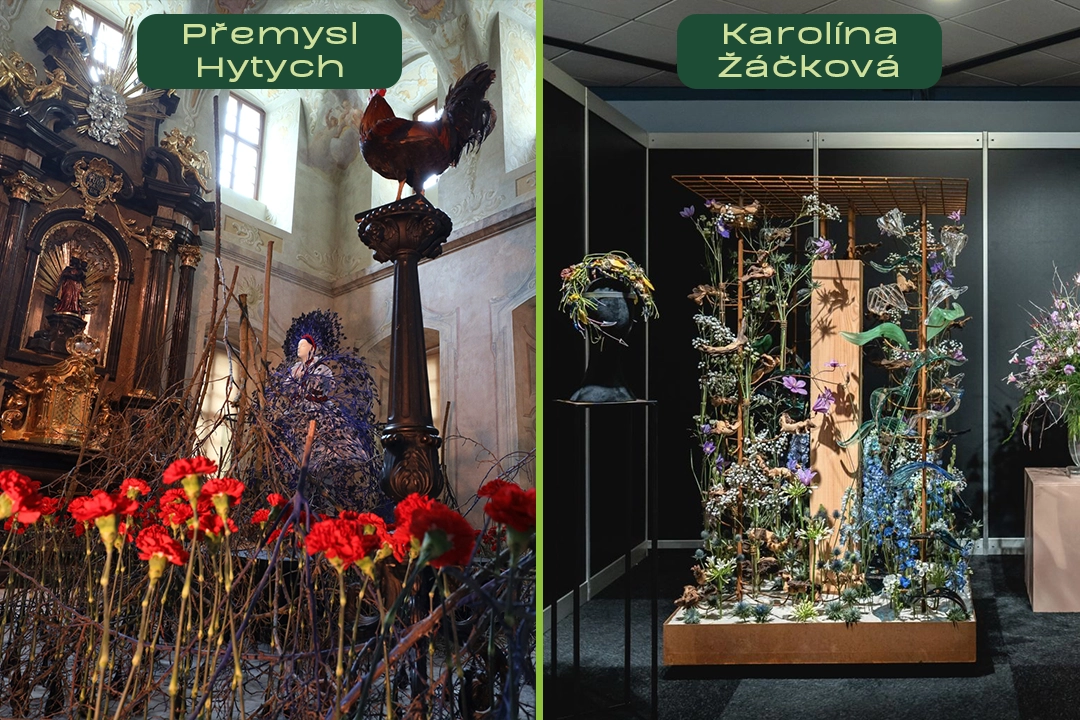
Fifth place at the World Championship. That is exactly the result Czech florist Přemysl Hytych achieved at the 2019 Interflora World Cup in Philadelphia.
At one of the most prestigious international competitions in professional floristry, he competed against representatives from other countries and secured a place among the world's elite. However, his work is remarkable for more than just his competition success.
Hytych has been working in floristry since the 1990s and has long explored natural structures, constructions and unconventional ways of combining plant materials with other artistic disciplines.
His projects often go beyond traditional flower arranging. He creates floral objects, installations and works inspired by fashion.
Flowers and Czech glass. A combination that may sound like an unusual meeting of two crafts, but in the hands of Karolína Žáčková, it has become part of competitive floral design.
The Czech florist is one of the prominent figures on today's competitive floristry scene. In 2022, she won the Czech National Championship title in the senior category at Děčínská kotva. She also achieved international success by winning the Visegrad Cup.
Another important milestone came in 2025, when she represented Czechia at the World Cup Floral Art in The Hague, Netherlands. At the championship, which brought together florists from 24 countries, she finished in 11th place overall.
It was not only her floristry techniques that attracted attention. Her competition designs also featured special glass structures created in Kamenický Šenov, a traditional centre of Czech glassmaking. The combination of flowers and glass demonstrated the fascinating possibilities that emerge when different crafts come together.
Another important aspect of Žáčková's work is her educational and professional activity. Alongside her own projects, she is dedicated to sharing her experience with other florists.
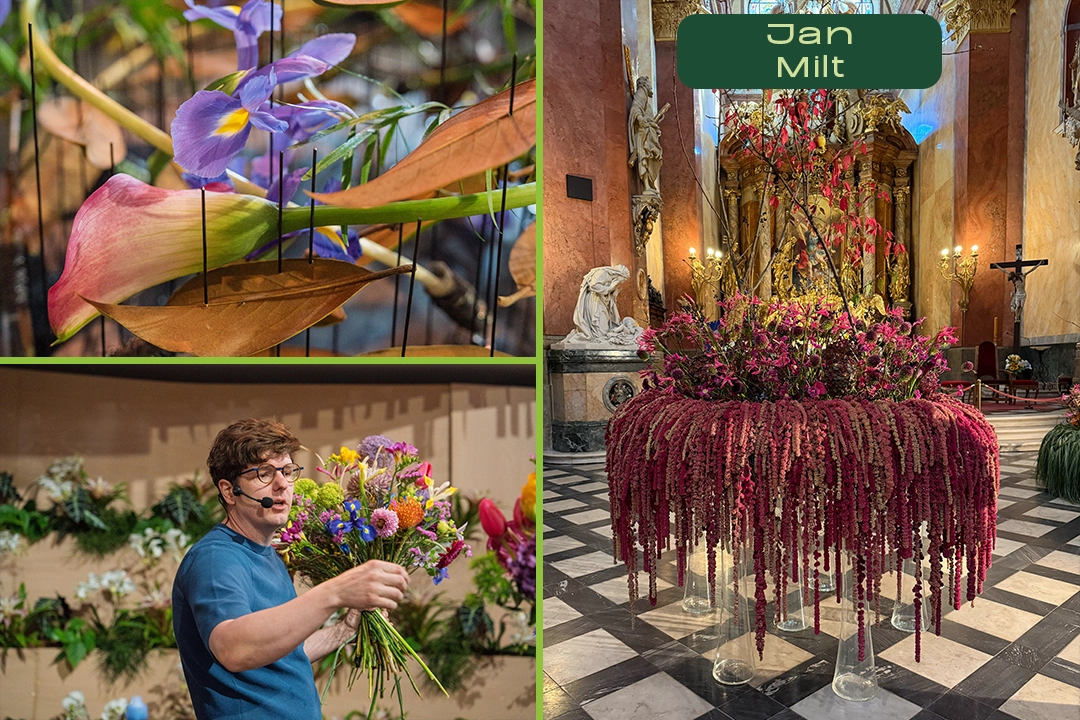
What happens when floristry, space, light and monumental spatial structures come together? Visitors could discover the answer at the spring exhibition Flora Olomouc 2024, where Czech florist Jan Milt designed the main exhibition, titled Galaxy of Flowers.
For Galaxy of Flowers, he decided to combine two areas that have long fascinated him: flowers and outer space. The result was an exhibition featuring thousands of flowers, elliptical structures, mirrors and the contrast between light and darkness. Visitors could explore it from different angles, gradually discovering its individual elements.
At St. Gabriel, we also have the opportunity to collaborate with Jan Milt. For example, in October 2026, Jan used our flowers to create an installation in the Baroque Church of St. Michael as part of the Rozkvetlé památky (Blooming Landmarks) project in Olomouc. You can see the finished floral decorations in this video of the installation. You may also have encountered Jan's work at Flora Olomouc in the past, where he led a workshop combining floristry with music, demonstrating how floral arrangements can be created to the accompaniment of blues. Watch the video from this workshop as well.
You do not have to create decorations for the royal family or build installations several metres tall to apply some of these approaches to your own floristry practice. Many of the principles that made these renowned florists famous also work when creating everyday bouquets, wedding decorations or shop window displays.
1. Don't be afraid of unusual materials
When creating arrangements, try working not only with traditional flowers but also with materials you would not normally use in everyday bouquets. An interesting branch shape or a distinctive leaf texture can define the character of an entire composition.
2. Try working with a single colour or type of flower
Jeff Leatham often bases his designs on repeating the same material. You can apply a similar principle to monochromatic bouquets, reception decorations or larger wedding arrangements. Instead of combining many different shades, try creating a composition using several varieties in the same colour.
3. Treat the space as part of the arrangement
When preparing larger floral decorations, consider not only the composition itself but also where people will view it from, how it will look in natural or artificial light, and whether it might obstruct movement through the space.
4. Embrace seasonality and the natural character of flowers
Shane Connolly's work reminds us that seasonal materials do not have to be a limitation. On the contrary, they can help create an authentic composition that reflects a particular time of year.
5. Keep experimenting with new techniques
The competition achievements of Přemysl Hytych and Karolína Žáčková, along with Gregor Lersch's many years of educational work, demonstrate the importance of professional development. Floristry competitions, seminars and experimenting with new structures can provide inspiration that later finds its way into everyday work in a flower shop.
Eight individuals, eight different approaches. While Constance Spry was changing the rules of floral material selection almost a century ago, today's creators are experimenting with architecture, light and unusual structures.
But they all have one thing in common. Their work is not just about beautiful flowers, but above all about ideas, knowledge of materials and the courage to try something different. And that is exactly where you might find inspiration for your next bouquet or floral project.
At St. Gabriel, we enjoy following the work of talented florists and being part of their creative process. Whether you are preparing everyday bouquets, wedding decorations or your own original installations, our range includes cut flowers, foliage, decorations and floristry supplies to help bring your ideas to life.