Before we set off on a journey around the world, there is one thing we need to clarify: the term national flower does not carry the same weight everywhere.
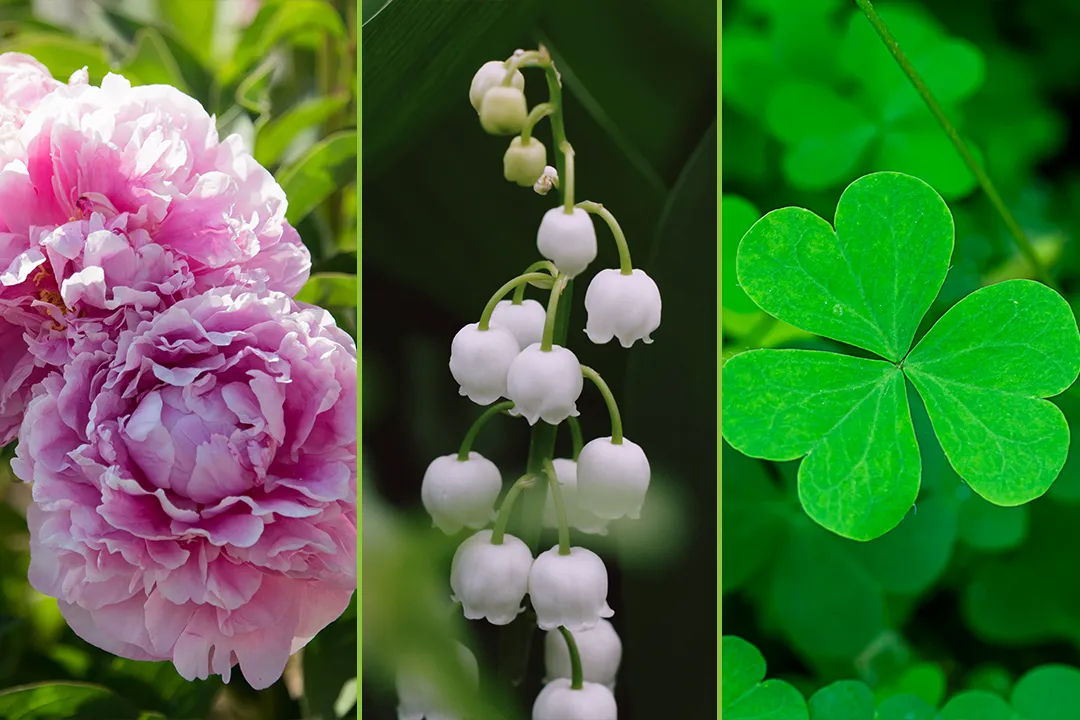
Not only is the peony one of the most popular flowers, but since 2022 it has also had another important role in Romania. Romanian law officially declared it the national flower of Romania, following an initiative from the Faculty of Horticulture at the University of Agronomic Sciences and Veterinary Medicine of Bucharest.
Interestingly, Romania’s national symbol is not limited to a single peony. The concept of the national flower includes several wild and cultivated species of the genus Paeonia. The peony has a long cultural tradition in Romania and is associated with beauty, vitality and health, among other things.
While Romania opted for the magnificent peony, Finland is represented by the much more modest lily of the valley (Convallaria majalis). According to Finland’s official information portal, it was chosen because it is very familiar to Finns and grows almost throughout the country. Its small, white, bell-shaped flowers appear in early summer in forests, parks and gardens, and the lily of the valley also has its place in Finnish poetry and culture.
Sweden acquired its national flower relatively recently. In 2021, the Swedish Botanical Society held a public vote, with 30 plants originally nominated.
The eventual winner was the harebell (Campanula rotundifolia), known in Swedish as liten blåklocka. It grows throughout the country, from open countryside to mountainous areas, and today both the Swedish Botanical Society and the Swedish University of Agricultural Sciences refer to it as the national flower.
When it comes to the United Kingdom, one flower simply would not be enough. Its individual nations have their own traditional plant symbols:
These four plants were, for example, brought together in the official emblem for the coronation of King Charles III in 2023. Botanically, however, they do not always represent one precisely defined plant.
The shamrock is not even one specific flower, but a traditional term for a three-leaved clover. It is therefore more accurate to refer to them as national plant symbols rather than automatically describing all four as official national flowers.
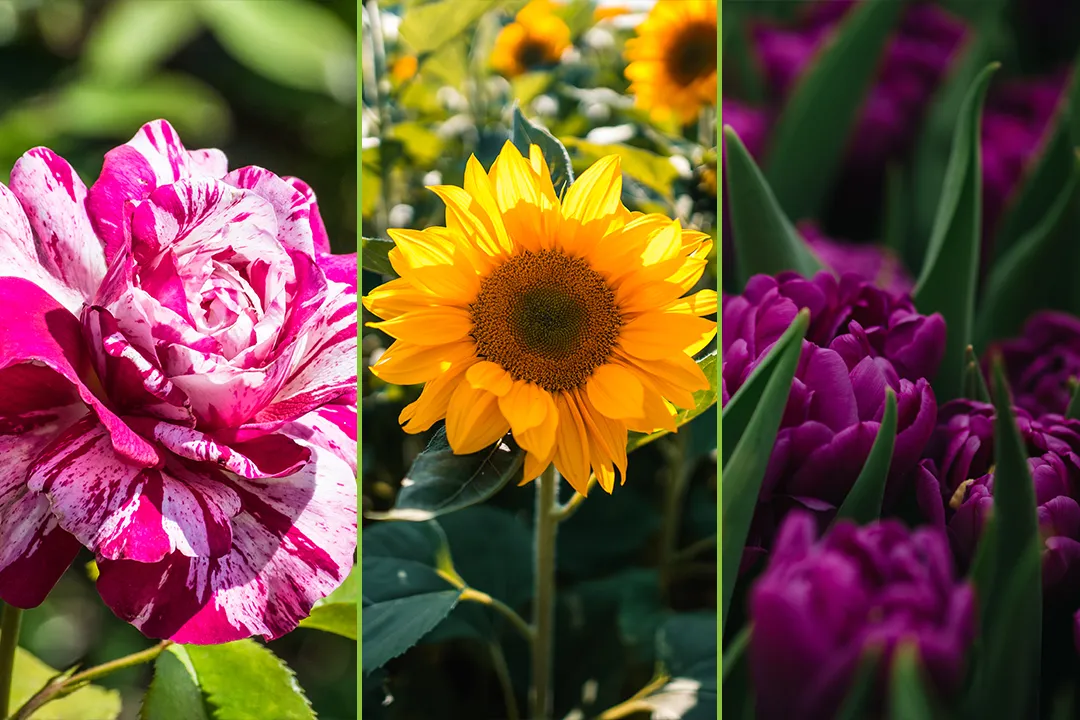
When you think of Bulgaria and flowers, the rose quickly comes to mind. Above all, the oil-bearing Damask rose Rosa damascena, whose cultivation is closely associated with the famous area around Kazanlak – the Rose Valley.
Bulgarian state institutions themselves describe the rose as one of the country’s best-known national symbols. The Ministry of Tourism also highlights the long tradition of the Rose Festival in Kazanlak and the production of the famous Bulgarian rose oil, which we explored in a separate article: Damask rose: Where does the Queen of Bulgaria grow?
Ukraine is a good example of why the term “national flower” should be used with care. The sunflower is strongly associated with the country. The National Bank of Ukraine, for example, describes it in its symbolism as a traditional symbol of the Ukrainian land and also uses it as an image representing Ukraine itself.
However, the guelder rose (Viburnum opulus), known as kalyna in Ukrainian, holds an even deeper place in Ukrainian folk culture. It appears in songs, embroidery, rituals and other expressions of Ukrainian culture and is often understood as a symbol of home, beauty, memory and national identity.
Few associations seem as natural as the Netherlands equals tulips. After all, who wouldn’t immediately picture colourful fields, Keukenhof, flower bulbs and the enormous floriculture industry that has made the tulip one of the most recognisable images of the Netherlands?
Even the official Dutch tourism portal describes the tulip as an icon of Dutch heritage. But being an iconic flower does not automatically make it an official national flower.
When it comes to European countries in particular, the internet is full of confident claims that are not quite so clear-cut upon closer inspection. For France, for example, the fleur-de-lis is often mentioned, a historical symbol primarily associated with the French monarchy. However, the present-day French Republic does not designate it as its national flower.
In popular lists, Germany is often associated with the cornflower. Its historical symbolism, however, is complex, and at different times it has been associated with various political movements. Simply describing it as Germany’s official national flower would therefore be misleading.
And what about Czechia? We do not have a national flower established by law either, but we do at least have a national tree. The linden appears in state symbolism, for example in the form of linden branches. The Ministry of Foreign Affairs lists it among the traditional symbols of the Czech state that are not enshrined in the constitution.
Beyond Europe, we find a number of countries whose national flowers are defined much more clearly. And you may be surprised by how many of them you already know.
The United States opted for a classic. Its national floral emblem is the rose.
Congress designated it as this symbol in 1986, and President Ronald Reagan subsequently issued the relevant proclamation on 20 November 1986. The status of the rose is now also directly stated in the United States Code.
No single species or cultivar was selected. The national emblem is simply the flower commonly known as the rose.
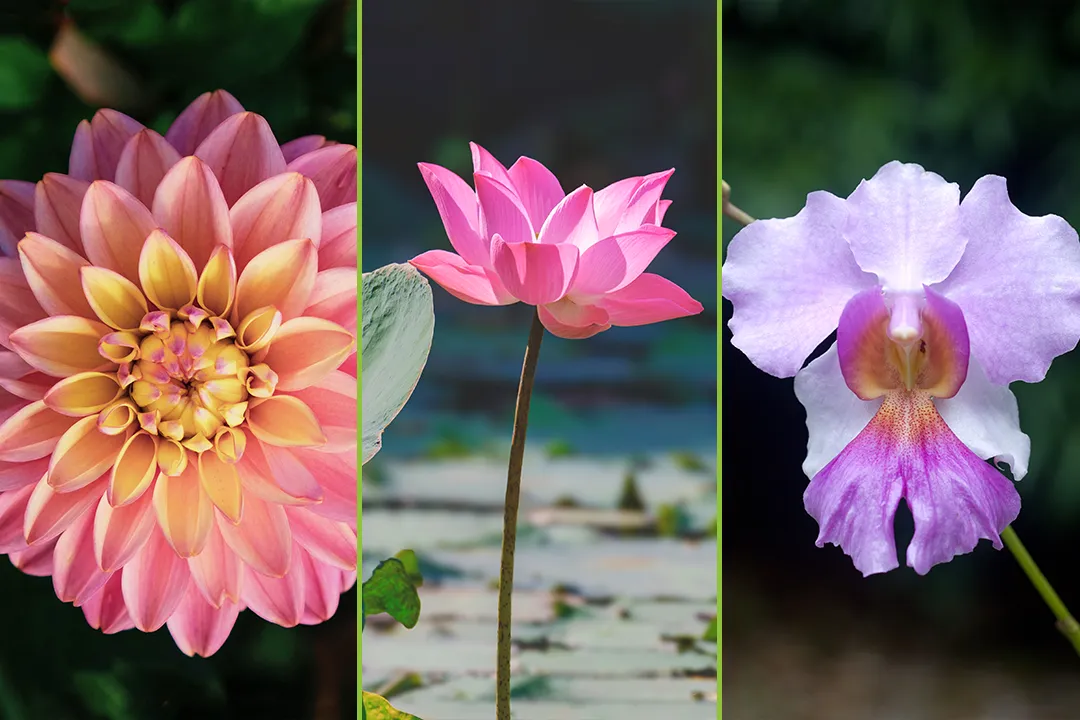
Another floristry favourite takes us to Mexico. The dahlia (Dahlia spp.) was declared Mexico’s national flower and a symbol of Mexican floriculture by presidential decree in 1963.
For Mexico, however, it is much more than just an ornamental plant. Dahlias are native to this part of the Americas, and their history stretches far back into the pre-Columbian era. In Mexico, they were also used in traditional medicine and gastronomy.
India is represented by the Indian lotus (Nelumbo nucifera). Indian government sources list it as the national flower and highlight its exceptional place in Indian art, mythology and culture.
Growing from water and mud with its striking flower opening above the surface, the lotus has acquired strong spiritual symbolism in many Asian cultures. In India, it appears in art, architecture and religious traditions.
Singapore chose an orchid, and not just any orchid. In 1981, Vanda Miss Joaquim was selected as the national flower from around forty candidates, and its currently accepted botanical name is Papilionanthe Miss Joaquim. It is an orchid hybrid associated with Agnes Joaquim, who created it at the end of the 19th century.
Its colour was not the only factor in its selection; its resilience and ability to flower regularly also played a role. These qualities were intended to symbolise the spirit of Singapore.
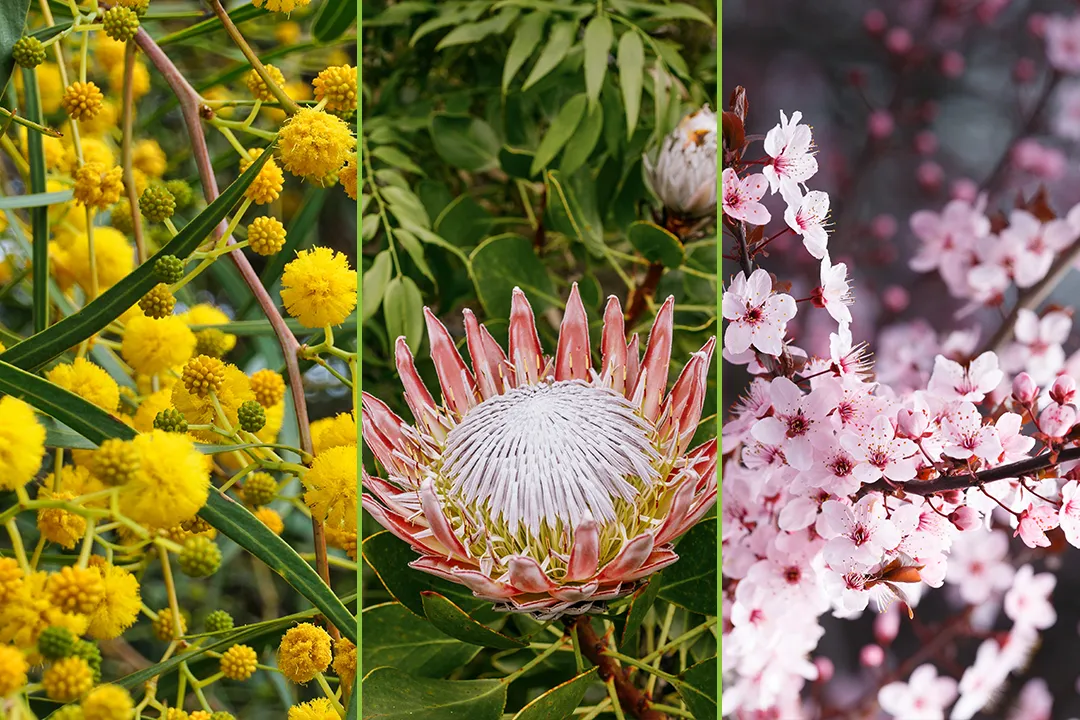
Australia is represented by the golden wattle, or Acacia pycnantha. It was officially proclaimed the national floral emblem in 1988.
Its yellow flowers and green leaves also reflect Australia’s national colours of green and gold. The wattle motif appears on Australian coins, medals, honours and other national symbols. Australia even celebrates National Wattle Day every year on 1 September, marking the beginning of the Australian spring.
South Africa has one of the most distinctive national flowers: the king protea (Protea cynaroides). The South African government officially lists it among the country’s national symbols.
Its striking flower heads are the largest within the genus Protea, and the plant is particularly characteristic of the south-western and southern parts of South Africa.
You may be less familiar with Argentina’s ceibo (Erythrina crista-galli), a tree with striking red flowers. Its flower was declared the national flower of Argentina by decree in 1942. Its popularity among the public played a role in the selection, along with the plant’s distribution and its presence in local legends, folklore and culture.
Before the ceibo was selected, the magnolia was also considered. However, it was ultimately rejected, partly because it is not native to Argentina.
If we held a quick poll, most of you would probably associate Japan with the beautiful cherry blossom, or sakura. And that is no coincidence.
Sakura is one of the most prominent symbols of Japanese culture. Japanese diplomatic sources describe it as a plant that strongly represents the country. The centuries-old tradition of hanami, or viewing cherry blossoms in bloom, is also closely associated with spring in Japan.
But alongside sakura stands another flower: the chrysanthemum. It is closely associated with the Japanese Imperial Family, and its motif can be found, for example, on Japan’s highest state decoration.
So what is Japan’s actual national flower? The answer is not straightforward. Japanese published sources point out that Japan does not have a national flower designated by law, and both flowers are traditionally regarded as floral symbols of the country.
National flowers show just how important a role plants can play in human culture. In some places, they represent local nature; elsewhere, history, tradition, the economy or values with which a country identifies. And sometimes the most interesting thing is that there is no official national flower at all.
So the next time you pick up a rose, peony, dahlia, orchid or protea, you may see more than just another material for your floral arrangement. Behind each one may lie the story of a country thousands of kilometres away.
Would you like to create with them too? Roses, peonies, dahlias, orchids, proteas and many other flowers are available in the highest quality from us at St. Gabriel. Register for our e-shop and choose from our fresh selection.