No one creates the perfect bouquet on their very first try, so don’t get discouraged. The florists from the flower shop Poupata know that very well. “My first official school bouquet was absolutely terrible. Orange gerberas, green santini chrysanthemums, and green leaves all around. But it gradually started getting better,” Kačka recalls.
And that’s exactly what we love most about floristry. Everyone starts somewhere. So let’s take a look together at how you can start too.
Careful flower selection is the foundation. The right combination of colors, shapes, and textures can create a harmonious and fresh-looking bouquet.
If you are a complete beginner, florists recommend not overcomplicating things and starting with just one type of flower. That way, you don’t have to worry about whether the blooms match each other.
“People often make mistakes already when choosing flowers. They pick varieties that are difficult for beginners to arrange or that slip in their hands,” explains Barča from Poupata, mentioning mainly gerberas, roses, and carnations. “I would recommend choosing more clustered flowers that add volume and are easier to hold,” she adds.
Opinions on the best flowers for beginners may differ, however. Some florists actually recommend roses because they have sturdy stems and symmetrical blooms.
What everyone agrees on, though, is the importance of decorative greenery, which adds softness and helps shape the bouquet.
Great choices include:
And one more florist rule that is still widely followed in the Czech Republic – use an odd number of flowers in a classic bouquet. Even numbers are traditionally associated with funeral arrangements.
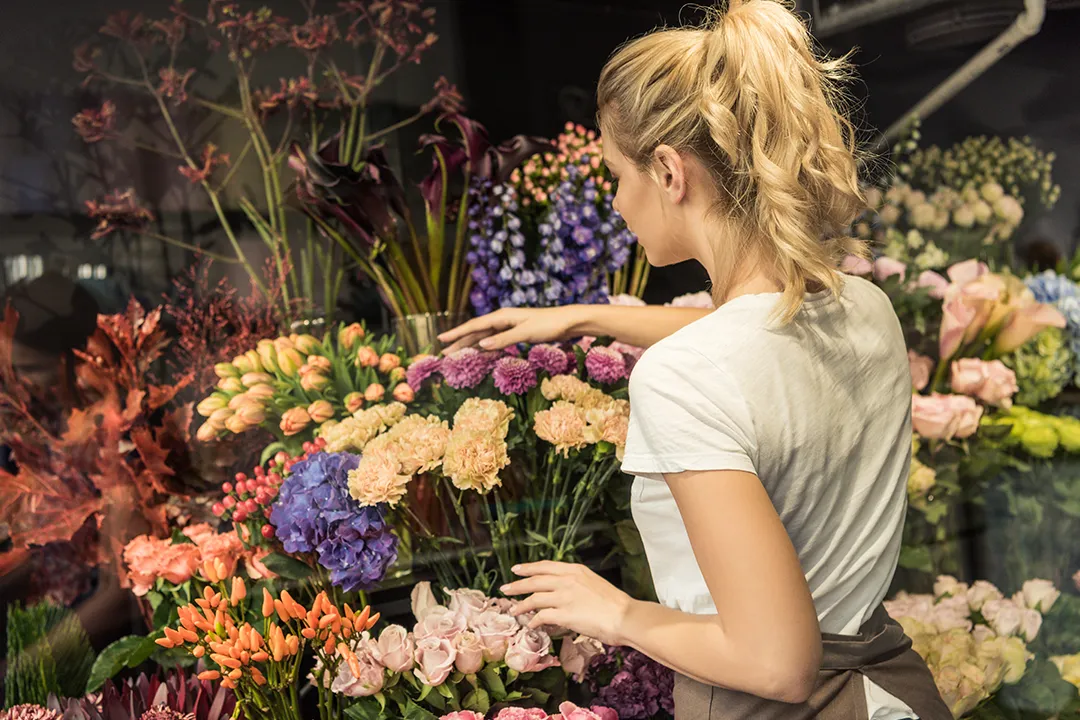
When creating your first bouquet, a few simple rules can help make the arrangement look natural and balanced.
1. Choose Flowers by Season
Flowers typical for a particular season tend to be fresher, easier to find, and often more affordable.
2. Stick to One Main Color
Choose one dominant shade and complement it with tones from the same or a contrasting color palette. This will make the bouquet feel more unified.
3. Combine Different Shapes
Pair dominant flowers with smaller blooms or greenery. The contrast between larger flowers and delicate details gives the bouquet depth and an airy feel.
4. The 3–5–8 Rule
As a beginner, you may find the simple florist rule 3–5–8 helpful. According to this guideline, the ideal bouquet contains:
This helps create a bouquet that feels balanced and full.
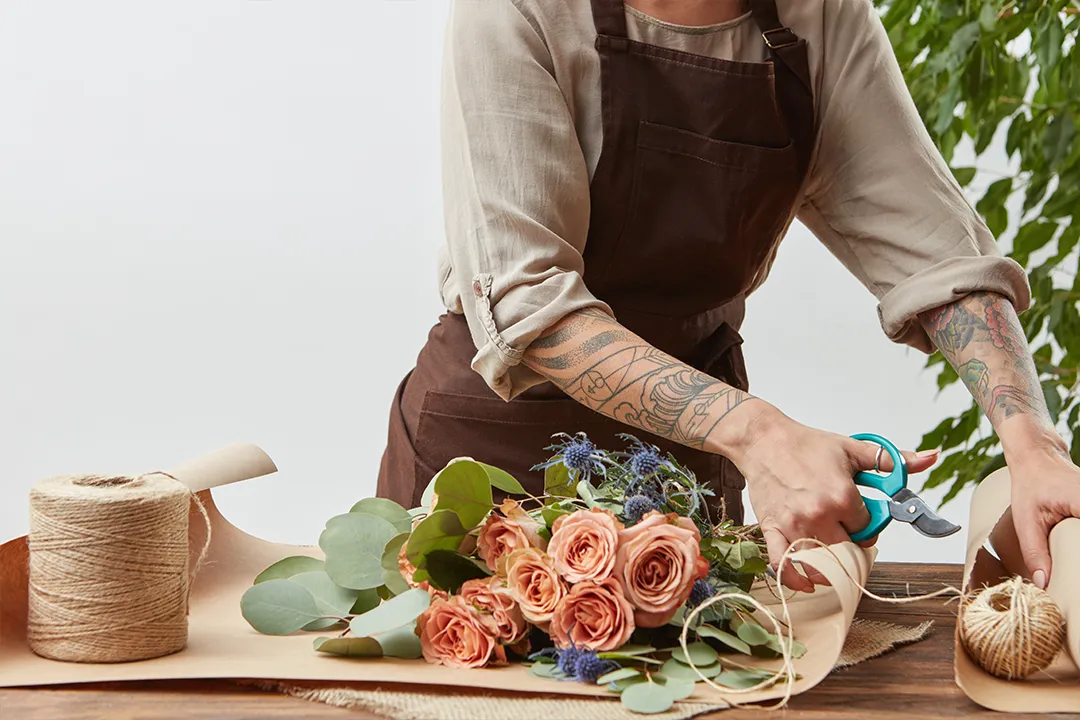
Before you start arranging, prepare:
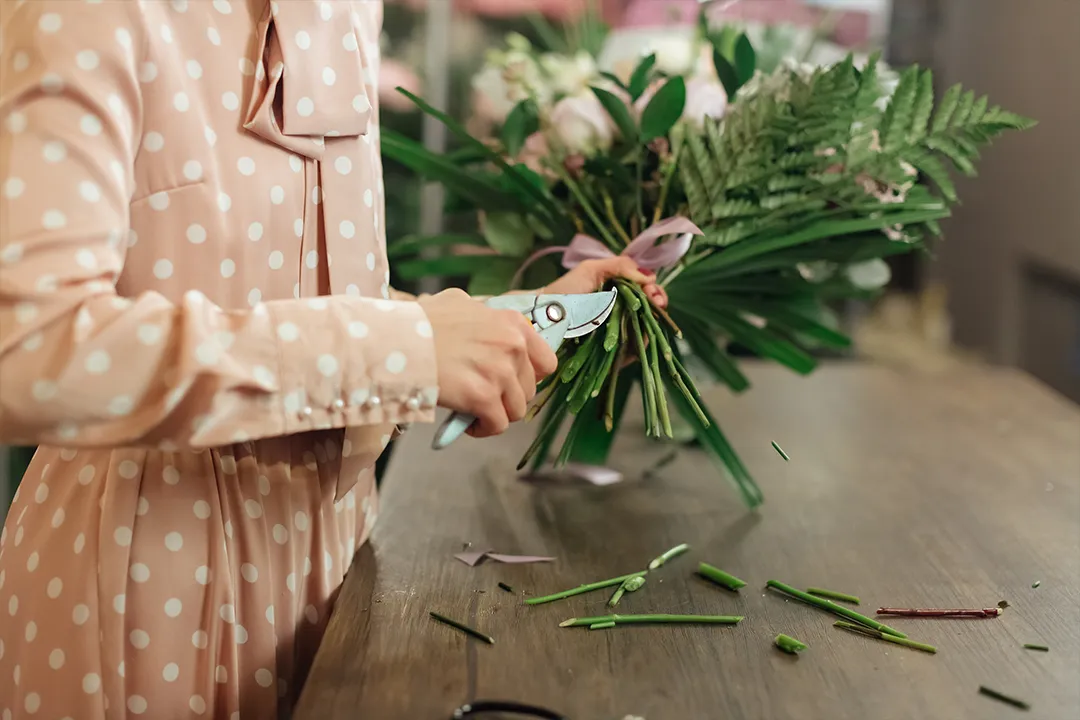
Once everything is ready, it’s time to prepare the flowers themselves – a step that should not be underestimated.
“We often see people not cleaning their flowers properly beforehand. The leaves then float in the water, and the bouquet rots much faster than necessary,” warns Kačka.
For each stem, first:
Then leave the flowers to rest in room-temperature water for one to two hours. You can also add flower food for cut flowers to the vase. Remember – the better the preparation, the longer your bouquet will stay beautiful.
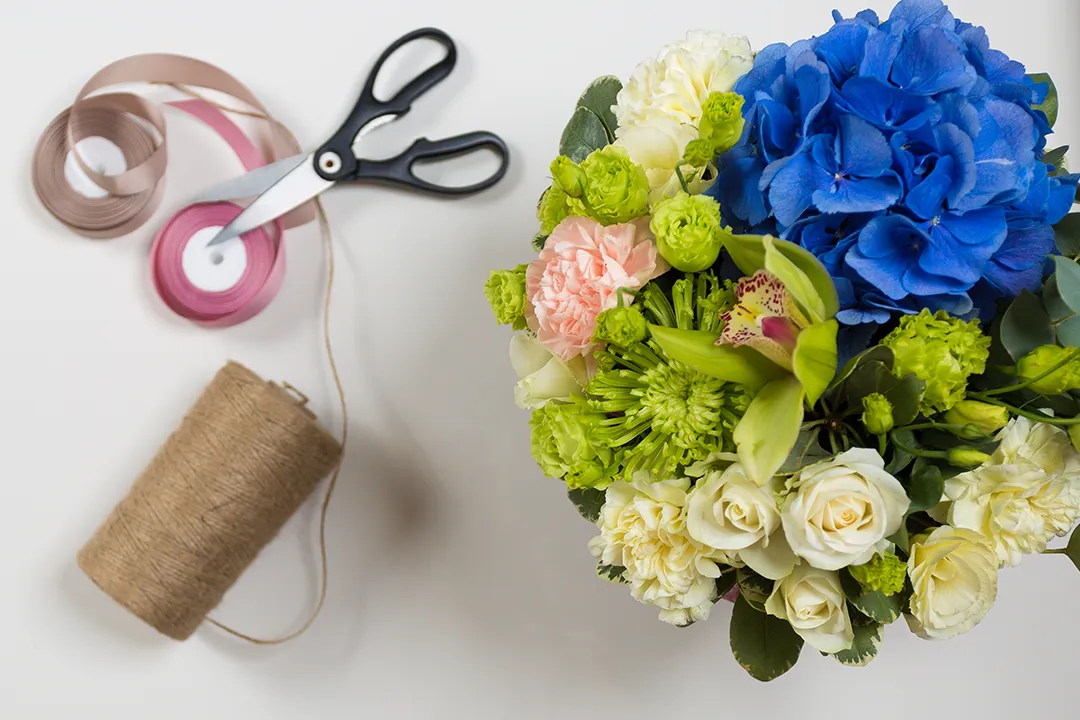
There are several different bouquet techniques, but the simplest and most universal one is the round bouquet style. It suits almost every type of flower and is manageable even for complete beginners.
You can also start the other way around – with greenery first – which Kačka from Poupata actually prefers. “In my opinion, it’s better to start with greenery and then add flowers through it so they don’t slip. Arrange the flowers in a spiral because without a spiral, you can’t move the stems, add more flowers, and the whole bouquet becomes too tight,” she explains.
Every bouquet is a bit of an experiment. Often, the most beautiful ones are those with small imperfections that feel natural and slightly untamed.
So don’t wait any longer and start arranging your very first bouquet. You may be surprised how quickly one attempt can turn into a new hobby or even the beginning of your floristry journey.
And if you work professionally in floristry or run a flower shop, high-quality fresh flowers are the foundation of every successful arrangement. At St. Gabriel, you’ll find a wide selection of cut flowers, greenery, and florist supplies from trusted growers around the world.