The history of International Women’s Day is inseparably linked to the struggle for women’s rights, which began at the turn of the 19th and 20th centuries. According to some sources, it commemorates protests in New York in 1857, when garment workers expressed their dissatisfaction with working conditions. Others connect the origins of the holiday to a demonstration of 15,000 seamstresses in 1908 who demanded better working conditions and higher wages.
The establishment of Women’s Day was proposed in 1910 by the German feminist Clara Zetkin at the International Conference of Socialist Organizations in Copenhagen. Her goal was to unify the fight for women’s suffrage.
However, March 8 became firmly established only after the First World War, following a demonstration by Russian women in Petrograd in 1917. After the abdication of the Tsar, a provisional government was formed that approved women’s right to vote. According to the Gregorian calendar, the protest took place on February 23, which corresponds to March 8 in the Julian calendar. This date thus became a symbol of the struggle for gender equality and the protection of women’s rights in society.
As you can see, International Women’s Day is far from being an exclusively communist holiday observed only in Eastern countries. It is celebrated across continents, and in each country it has a slightly different character.
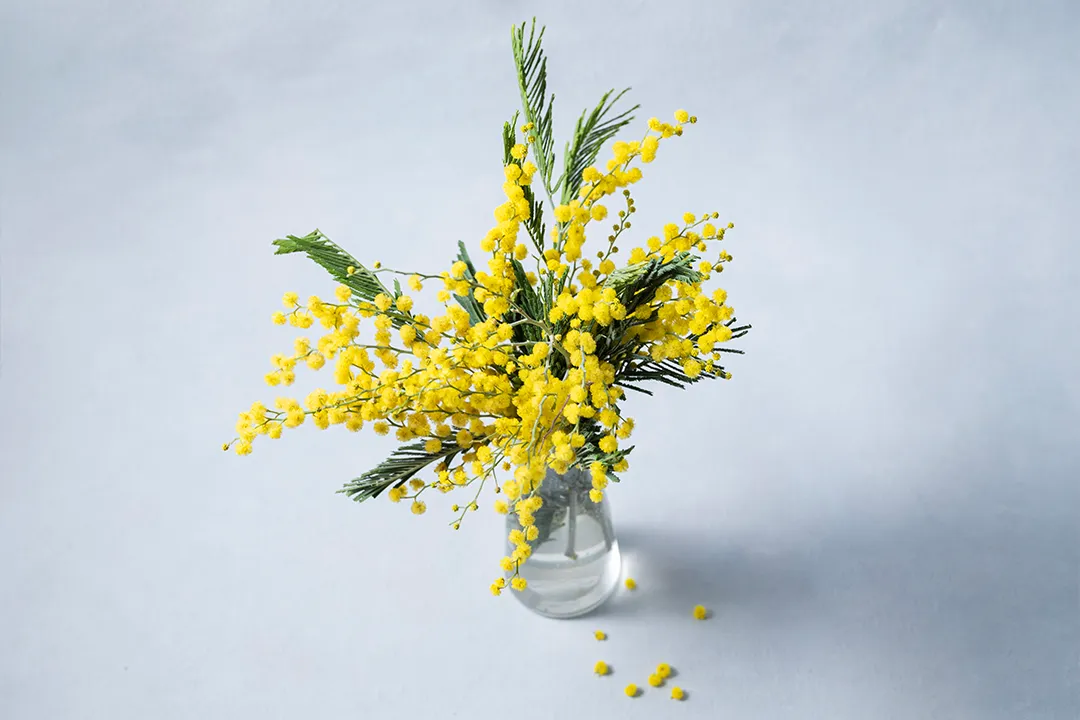
In Italy, March 8 is known as Festa della Donna, and its main symbol is the yellow mimosa (Acacia dealbata), of which more than 450,000 were sold in 2021 alone. Italians consider this flower a symbol of female strength, sensitivity, and devotion.
Women also give mimosa to one another as a sign of solidarity. During this period, yellow cakes and other dishes are even prepared.
In the United States, March 8 is not an official public holiday, but the entire month is designated as Women’s History Month. Various events, demonstrations, conferences, and business discussions are held, focusing on gender equality and women’s leadership.
In Russia, International Women’s Day has been an official public holiday since 1965. The original feminist meaning of the day has gradually weakened, and today it is more of an occasion when men give women flowers, chocolates, and expensive gifts.
In Australia, International Women’s Day has been celebrated for several decades and has a strongly activist character. Since the 1970s, marches and public discussions have been organized, focusing on greater representation of women, equality, and diversity.
In Spain, International Women’s Day also has a political dimension. In 2018, a mass general strike took place, with more than five million people participating. The day is often marked by protests, marches, and public events addressing gender equality issues.
In the United Kingdom, the Women of the World Festival (WOW) is held, usually lasting three days. It includes discussions, lectures, and exhibitions focused on global issues affecting women.

In the Czech Republic, nearly half of the population regularly celebrates International Women’s Day. The most common gifts include flowers, sweets, personal presents, and a shared dinner. In 2025, total spending related to International Women’s Day reached CZK 680 million, with the largest share spent on flowers. If this figure seems high, it is worth noting that spending during Easter or All Souls’ Day is significantly higher—reportedly exceeding one billion Czech crowns.
According to the Union of Florists and Flower Growers of the Czech Republic, the average Czech spends CZK 1,570 on flowers. It is therefore no surprise that during this period, revenues increase primarily for florists, as well as for grocery stores and restaurants. Some flower shops report that their turnover during International Women’s Day increases up to tenfold. On March 8, supermarkets sell tens of thousands of flowers.
“Interest in flowers for International Women’s Day is traditionally strong. In terms of sales and turnover, it is one of the most important days of the year—even more significant than Valentine’s Day,” said Milan Dopita, a member of the board of the Union of Florists and Flower Growers of the Czech Republic. Unlike Valentine’s Day, when men typically buy a bouquet only for their partner, customers on International Women’s Day tend to purchase multiple smaller flowers to please partners, mothers, sisters, or colleagues.

According to a 2025 survey, the most popular choices among Czechs are:
You may find this surprising, but the once-stigmatized red carnations are now returning to popularity and are gaining favour among younger generations. Carnations as an underrated flower were also mentioned by our customer Jindřiška from Květiny Jindřiška.
“It is a beautiful flower that lasts a long time, comes in an incredible range of colours, and some varieties are even fragrant. Its price remains stable, and I think it is a great shame that it is associated with communism. We are trying to teach people to appreciate carnations again and to show that there are other varieties besides the red ones,” she said in our interview.
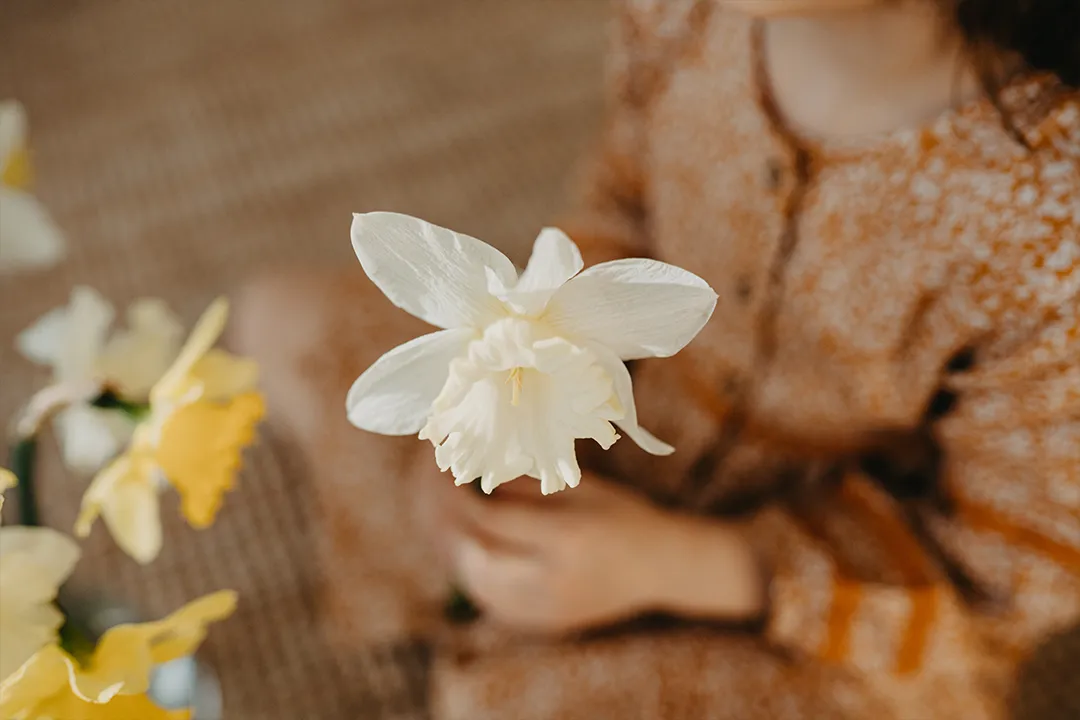
Other popular choices include spring flowers such as daffodils (Narcissus), hyacinths (Hyacinthus), pussy willow branches (Salix), and freesias (Freesia). Mixed and colourful bouquets are widely purchased, and in recent years potted plants have been winning over more and more customers. According to Floral Daily, roses (Rosa) also dominate in Vietnam, while tulips (Tulipa) are the top choice in Poland and Ukraine.
Do not miss the opportunity to prepare your stock of flowers that your customers will lovingly give to the exceptional women in their lives. In our e-shop, you will find a wide selection of flowers from verified growers around the world.