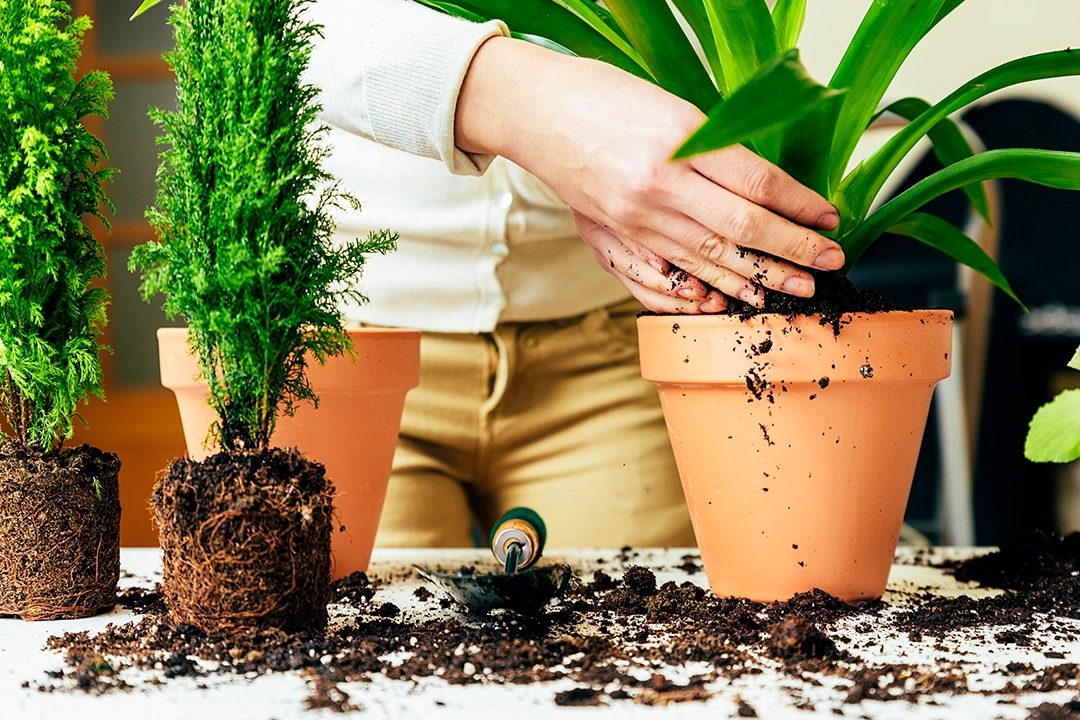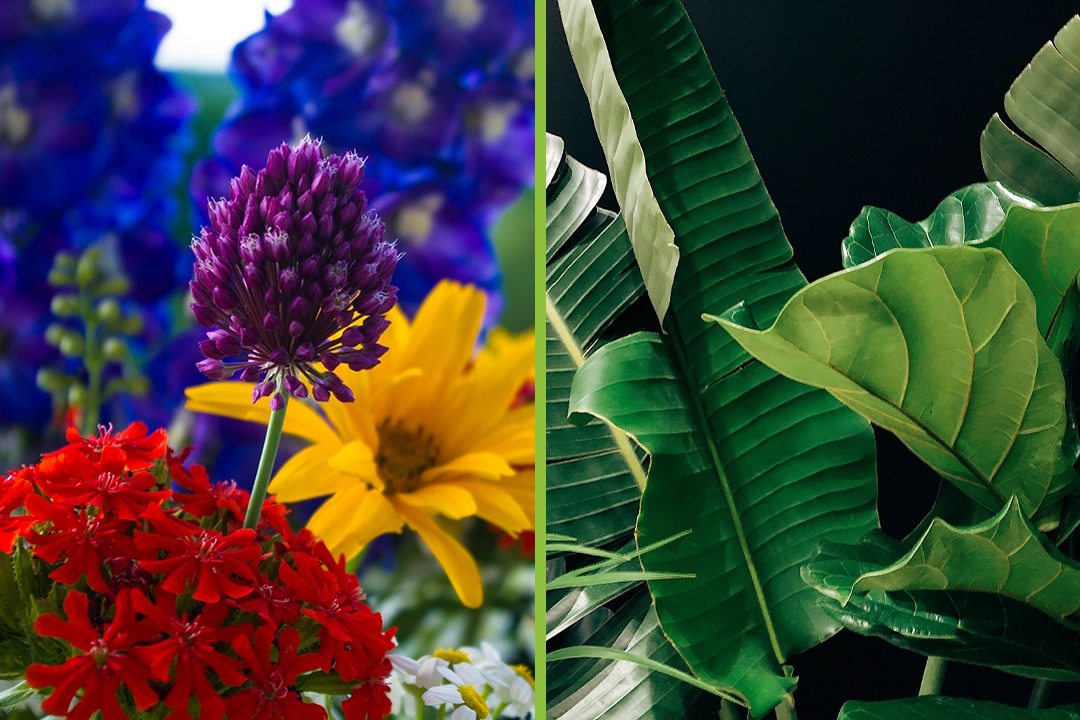
Flowers brighten not only your home, office, or any other space, but they also bring a range of additional benefits.
Whether you choose cut flowers or houseplants, one thing is certain. Every piece of nature counts in a home.
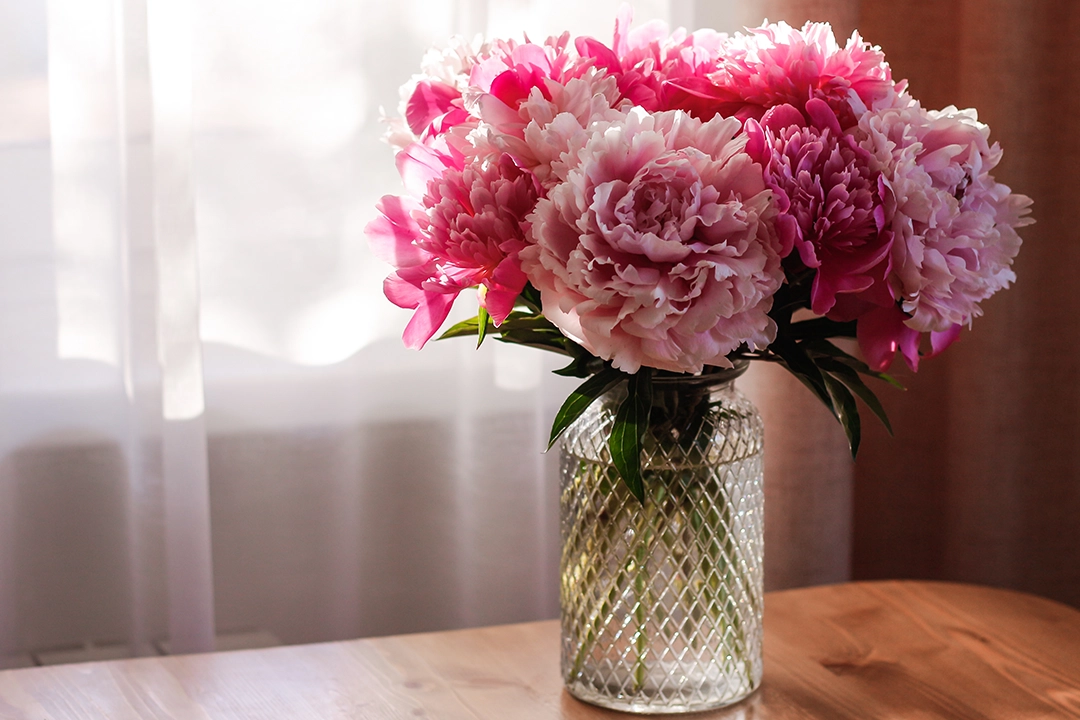
Cut flowers have long been among the most popular gifts. And it is easy to see why – a beautifully arranged bouquet can bring joy within seconds.
Their great advantage is originality and variety. A florist can create a bouquet exactly according to your wishes – from minimalist arrangements to rich, festive bouquets.
Cut flowers are most commonly suitable for:
A bouquet is often a gesture that expresses emotions – joy, gratitude, or love.

Most of us have probably experienced bringing home an impressive bouquet that drooped after just a few days. Do you want your cut flowers to stay beautiful in a vase for as long as possible? Here are several proven tips.
Some traditional tips recommend adding sugar and vinegar or a drop of lemon juice to the water. Vinegar or lemon juice lowers the pH and slows bacterial growth, while sugar provides nutrients for the flowers.
Once your bouquet is arranged in the vase, the next question is where to place it. Drafts, direct sunlight, heating, or air conditioning are not suitable for cut flowers. Do not place them near a bowl of fruit either. Bananas and apples release ethylene as they ripen, a gas that causes flowers to wilt prematurely.
If the flowers start to wilt, you can try a simple trick. Trim the stems again and immerse them in cold water, including the blooms, for a few minutes. They can often recover.
Unlike cut flowers, potted plants are a long-term investment in your interior. If you take proper care of them, they can last for years and become part of your home.
Their main advantages include:
In recent years, houseplants have experienced a major comeback. They have become not only decoration but also an important part of interior design in homes, offices, and public spaces.
Potted plants are an ideal gift, for example:
In floristry, potted plants are usually divided according to what makes them decorative.
These plants attract attention mainly with their leaves – their color, texture, or distinctive veins. Leaves may be glossy, velvety, wavy, or strongly veined, making them an interesting design element.
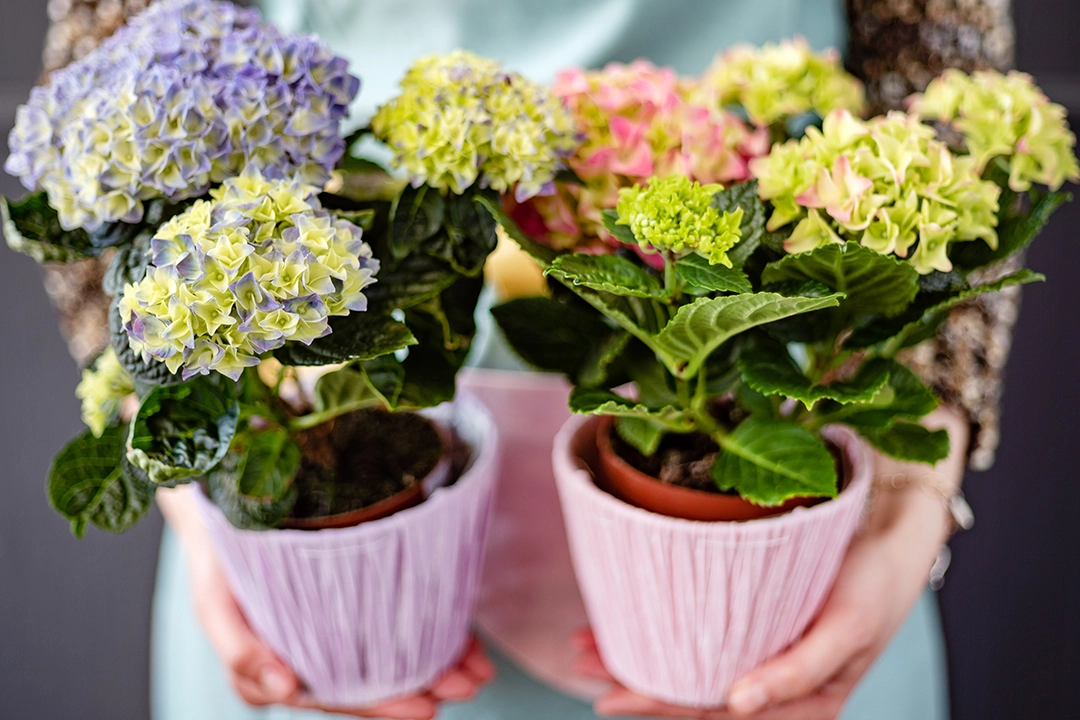
Here the main feature is the flower itself, which makes these plants very popular as seasonal decorations or gifts.
Some plants are mainly decorative because of their fruits, such as small citrus plants or colorful berries, which are often used in decorations as well.
Proper care is the key to helping houseplants thrive and stay with you for many years. Each species has its own specific requirements, but some rules apply to most plants.
Stejně jako u řezaných květin i u těch pokojových je důležité jejich správné umístění. Většina rostlin má ráda dostatek světla, ale ne přímé slunce, na kterém vydrží jen kaktusy a sukulenty. Nejvíce se rostlinám daří v polostínu (například oblíbeným monsterám nebo filodendronům). Zpravidla čím tmavší listy rostlina má, tím více stínu obvykle snese.
Just like with cut flowers, proper placement is also important for houseplants. Most plants like plenty of light, but not direct sunlight, which is tolerated mainly by cacti and succulents. Most plants thrive in partial shade, such as popular Monstera or Philodendron. In general, the darker the leaves of a plant, the more shade it can usually tolerate.
How can you tell if a plant does not have enough light? Its leaves become pale and stretched.
How can you tell if you have overwatered a plant? Its leaves begin to wilt or turn yellow. In such a case, it is important to act as quickly as possible. Remove the yellow leaves from the overwatered plant, remove as much of the substrate as possible (being careful not to damage the roots), clean the pot, place a drainage layer at the bottom of the container (for example sand), and replant the plant.
Offer your customers a wide selection of elegant bouquets for festive moments as well as flowering and green potted plants for their interiors. In the St. Gabriel assortment, you will find the most popular plants as well as unusual varieties from trusted growers around the world. Register in our e-shop.