The holiday of lovers has its roots in the ancient Roman festival of Lupercalia, which took place in mid-February and was dedicated to Faunus, the Roman god of fertility. This celebration was not originally connected to romance, but it laid the foundations for traditions that gradually evolved into today’s celebration of love.
In the 5th century, Pope Gelasius I decided to replace the original pagan festival with a Christian holiday. It was named after the priest Valentine, who is said to have secretly married young couples during the reign of Emperor Claudius II. Claudius had banned marriages for young men, believing that single men made better soldiers. For his actions, Saint Valentine was eventually executed and thus became a symbol of love and sacrifice.
Love and romance began to be associated with flowers only later, thanks to medieval poets such as Geoffrey Chaucer. During the Victorian era, floriography emerged—a language that used flowers to convey different messages and emotions. At a time when strict rules governed public expressions of feeling, flowers became a way to express love without words.
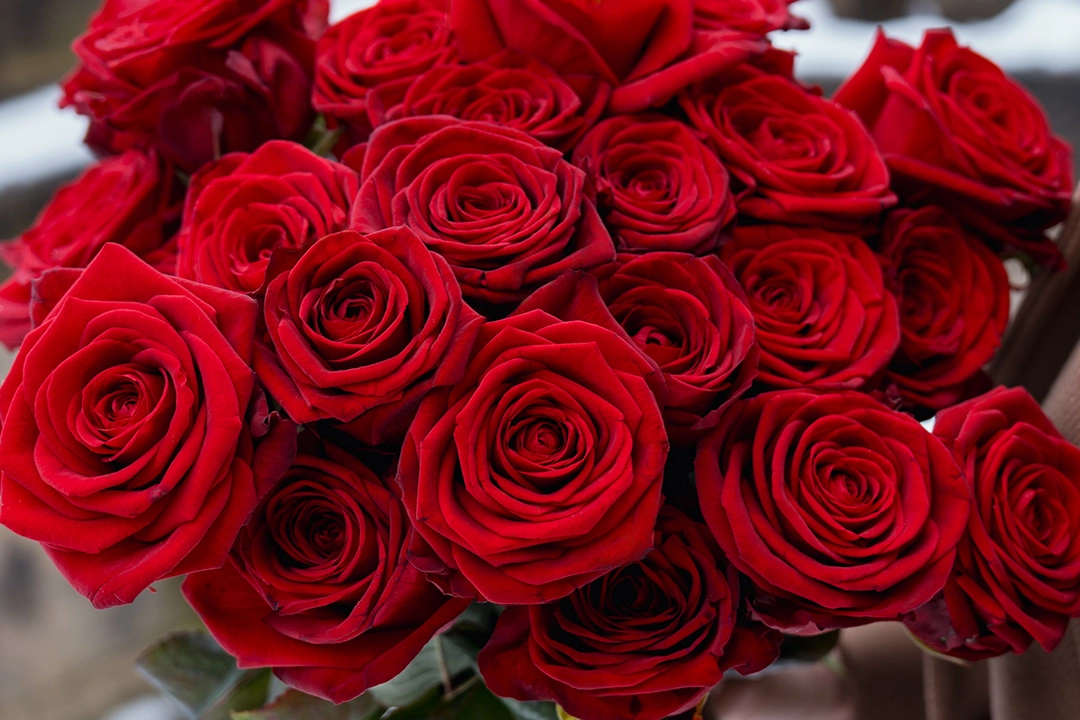
The rose is by far the best-selling flower on Valentine’s Day. It represents passionate love, a meaning that dates back to ancient times when the Romans and Greeks associated the red rose with the goddesses Aphrodite and Venus, deities of love.
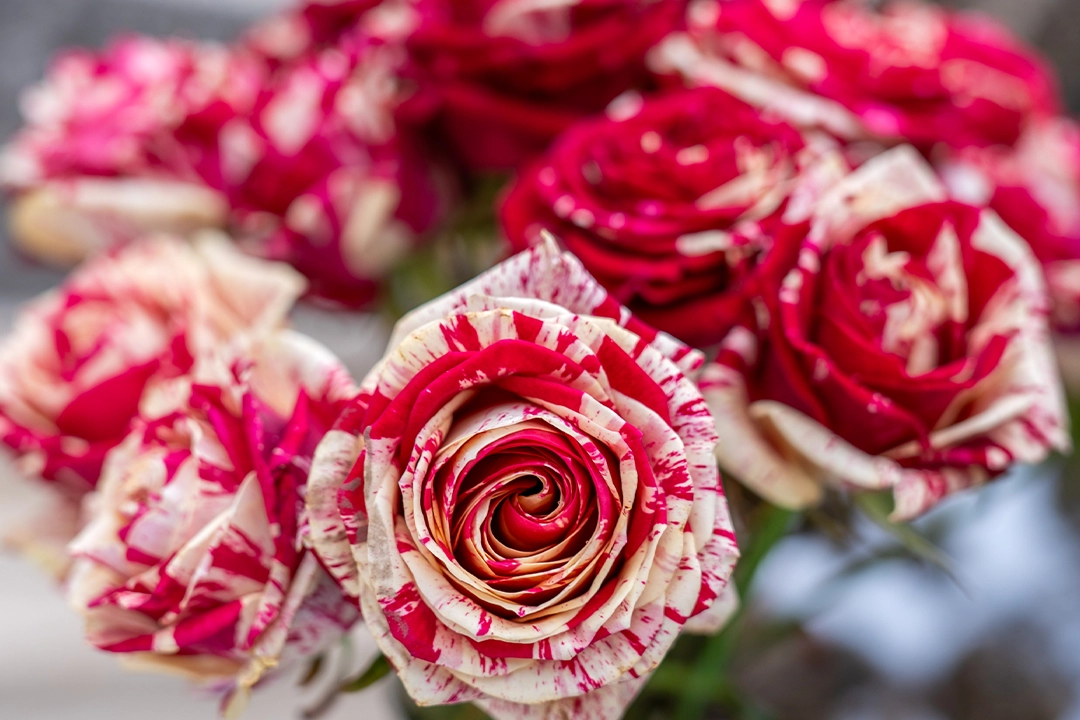
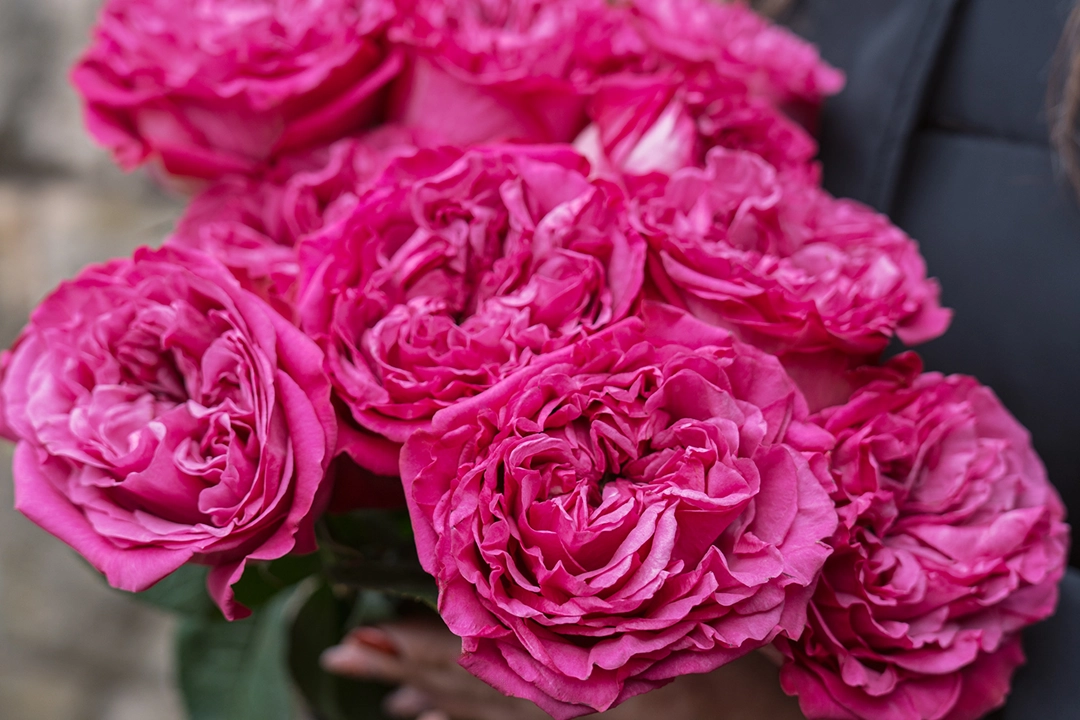
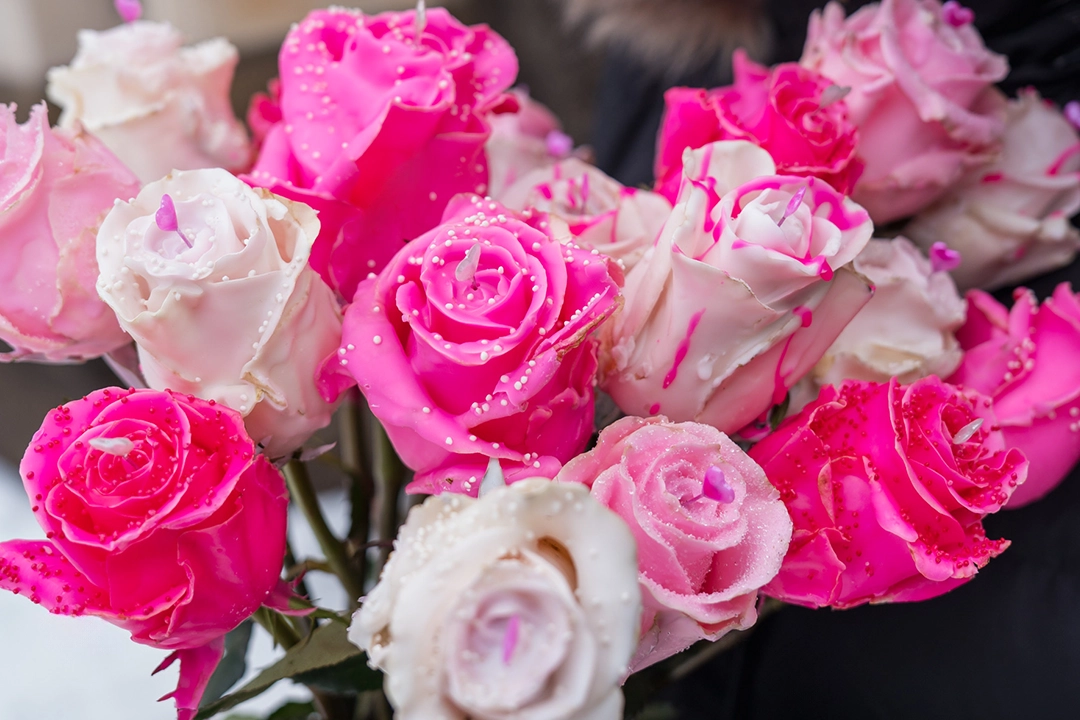
Although the red rose still dominates Valentine’s bouquets, burgundy, ombré, and even dyed roses have gained popularity in recent years, especially on social media.
According to a survey by NMS Market Research, May 1st remains more popular among Czechs, but the “American” Valentine’s Day is now celebrated by nearly half of the Czech population. On February 14, Czechs also spend more money than at the beginning of May.
In 2025, total spending reached 2.7 billion CZK, with as many as 31% of respondents purchasing cut flowers as a gift. Men spent approximately 1,000 CZK on gifts, while women spent around 900 CZK. Interestingly, mixed bouquets are the most commonly purchased, while potted plants during the Valentine’s period are more often bought by women.
If the statistics from the Czech Republic surprised you, the international figures may take your breath away. In 2026, spending on Valentine’s Day celebrations in the United States is expected to reach a record USD 29.1 billion. This means the average American will spend just under USD 200, or approximately 4,000 CZK.
Last year, people most commonly purchased sweets, greeting cards, and flowers, with the red rose reigning supreme across the Atlantic as well. In contrast, in Japan, women are traditionally given white and pink roses symbolizing delicacy, while women give chocolate to men on February 14. In Russia, tulips have gained popularity as a romantic alternative to roses and are most commonly given on March 8.
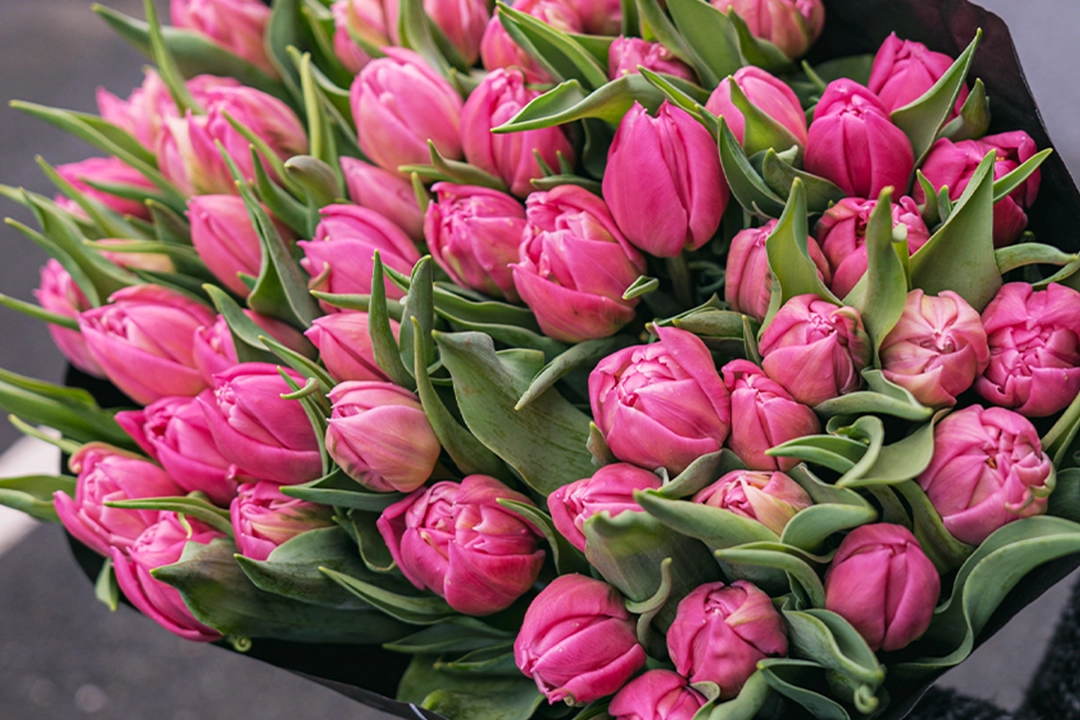
Valentine’s Day is a true “gold rush” for everyone working with flowers. Last year, 226 million flowers were sold at Royal Flora Holland, with roses alone accounting for 147 million of them. The highest demand is for red roses. In February and March, when Valentine’s Day reaches its peak, rose prices therefore rise regularly. For example, in 2024 the average price increased from 92.74 CZK in January to 97.69 CZK in February.
In the Czech Republic, spending on flowers in February exceeds 16 billion CZK. Prices of some rose varieties even double during this period. For other cut flowers, price increases around Valentine’s Day typically range from 15–25%.
The highest demand for flowers usually occurs 1–2 days before February 14, so make sure you are well prepared. Replenish your stocks of roses and other flowers through which your customers will express love to their loved ones. A wide selection of premium roses in various stem lengths and color options can be found in our e-shop.